What Are The Symptoms Of Cervicitis? How is cervicitis treated?, What is cervicitis? We have prepared some information you need to know in our article.
What Are The Symptoms Of Cervicitis? How is cervicitis treated?
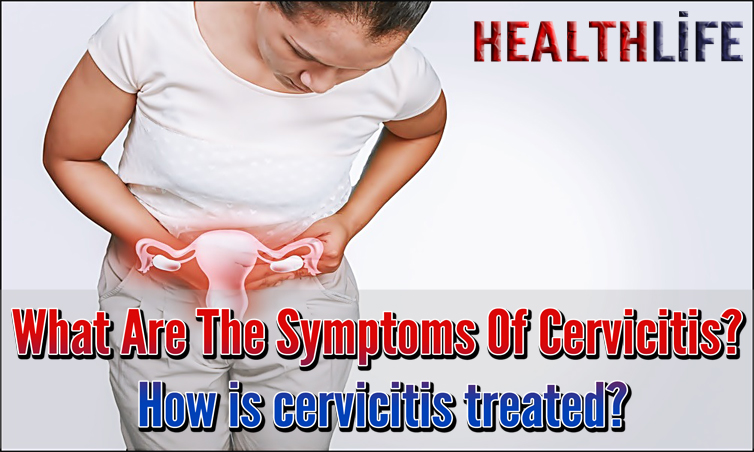
Cervicitis, also known as a wound on the cervix, is one of the most common gynecological problems. In the content of our article, you, our valued friends, can find detailed answers to the questions What is cervicitis? and How is cervicitis treated? So What are the symptoms of cervicitis?
More than half of women experience cervicitis at some point in their lives. Regardless of age, every sexually active woman is a suitable candidate for cervicitis. Most women with groin pain and vaginal discharge definitely have cervicitis, either together with another disease or alone. Cervicitis inflammation is a result of the body’s normally functioning defense mechanisms. When there is an injury, irritation or infection in any tissue, white blood cells, in other words, white blood cells, migrate to that area and the blood flow in this area increases. When this happens with cervicitis, the cervix, which is normally light pink, turns red and swells.
This condition can be seen as a wound on examination. Although cervicitis is usually diagnosed through gynecological examination, some additional tests are required to be sure of the diagnosis and to make a differential diagnosis. You can reach more detailed information about cervicitis symptoms by continuing our article.
What Causes Cervicitis?
Cervicitis Symptoms
– Vaginal discharge,
– Vaginal bleeding,
– Vaginal itching,
– Burning in the vagina,
– Pain during intercourse,
– Burning during urination,
– Lower back pain.
Since the symptoms of cervicitis are similar to many other diseases and do not cause specific complaints, it is very difficult for a person to suspect cervicitis on their own. It is usually noticed during a gynecological examination performed for another reason. In general, cervicitis is an inflammation of the uterine mucosa. It is most likely due to an infection. However, it can sometimes occur after irritation or trauma. The first symptom of cervicitis is vaginal discharge that occurs in the period following the end of menstrual bleeding. Other symptoms include abnormal vaginal bleeding, itching, burning in the vagina, pain during intercourse, burning during urination and lower back pain.
In mild cases, there may be no symptoms. However, as the condition progresses, foul-smelling and inflammatory discharge occurs. Prolonged and untreated cervicitis can disrupt mucus production, impair sperm entry into the cervical canal and lead to infertility. A pregnant woman with cervicitis also has a risk of miscarriage and premature birth. Postnatal lung and eye infections are more common in babies born to such mothers than normal.
Can Cervicitis Be Treated?
If the cervicitis condition is prolonged and there is no regression in the cervicitis table despite the treatment of the underlying cause, some minor surgical interventions can be performed to destroy the abnormal cells in the cervix. The most commonly used of these are cauterization and cryotherapy. Cauterization is destruction with the help of heat. This process is called wound burning among the people. Cryotherapy is the freezing of abnormal tissues with the help of liquid carbon dioxide or nitrogen. This is also called wound freezing among the people. Finally, laser destruction of the cells can be applied. Regardless of the treatment method, abundant watery vaginal discharge is observed for 1 to 2 weeks following the destruction of the cells. There may be bleeding in the form of spotting during this period. Therefore, it is necessary to avoid sexual intercourse for about 2 weeks after the procedures. The complete recovery period can take 6 to 8 weeks.

The cautery method is the oldest and most classic method in chronic cervicitis. Heat is obtained by passing an electric current through the tip of a calam-shaped probe. It is the treatment method that should be preferred last among the 3 methods. There may be very mild pain during the procedure. The scar tissue that occurs after the procedure can cause blockages in the cervical canal. The cryotherapy method has some advantages over cautery. It causes less pain. It allows for more controlled tissue destruction. It ensures less scar tissue formation. For this reason, it does not cause narrowing in the cervical canal. It is applied with a gun-shaped device. The areas touched by the tip of this gun freeze. The procedure can be done without any anesthesia. It is an extremely simple procedure that takes about 10 minutes. The laser method is the destruction of tissues with a laser. It has no advantage over cryotherapy.
How Should Precautions Be Taken to Protect Yourself from Cervicitis?
– In order to protect yourself from cervicitis or to ensure early diagnosis, some simple precautions are sufficient.
– Do not use irritants such as scented tampons or deodorants.
– Even if you do not have any complaints, have a gynecological examination once a year.
– Do not delay being examined in the presence of vaginal discharge.
– If your partner has symptoms of gonorrhea, consult your doctor immediately.
– Do not have sexual intercourse with people you are not very sure about.
What Are the Symptoms of Cervicitis, if cervicitis is prolonged and untreated, it can disrupt the production of mucus, disrupt the entry of sperm into the cervical canal and lead to infertility. A pregnant woman with cervicitis also has a risk of miscarriage and premature birth. If you have questions about our article on what are the symptoms of cervicitis, you can ask us in the comments section or on our social networks. You can share our page on what are the symptoms of cervicitis with your friends so that they can also be informed, and you can inform your friends about our article on what are the symptoms of cervicitis.
For your questions and complaints, you can write to us in the comments section. We are trying to help you with all your problems.
Our other recommendation link that may attract your attention; What Are The symptoms Of Polycystic Ovary Syndrome?