What Are The Symptoms Of Umbilical Hernia In Babies? Umbilical Hernia In Babies, How is umbilical hernia in babies treated? Some curious information about it.
What Are The Symptoms Of Umbilical Hernia In Babies? Umbilical Hernia In Babies

Umbilical hernia in babies occurs as a result of the muscles and layers that make up the abdominal wall not closing completely. This causes the abdominal wall around the belly button to remain weak. An umbilical hernia occurs when organs such as the intestine protrude through this weak abdominal wall. In the content of our article, you can find detailed answers to your questions about How is umbilical hernia treated in babies? and Treatment of umbilical hernia in babies that we have prepared for you, our valued friends. So What are the symptoms of umbilical hernia in babies?
Umbilical hernia is seen in approximately 20% of newborn babies. Umbilical hernia usually does not cause any discomfort, and in 90% of babies with a hernia, the hernia resolves on its own. Umbilical hernia may require treatment if it does not close spontaneously by the age of 4. Umbilical hernia in babies occurs when the tissues in the abdominal wall do not fully fuse with each other after birth. The risk of umbilical hernia is higher in babies born prematurely or with low birth weight. Umbilical hernia, which is seen in adults, occurs due to excessive increase in intra-abdominal pressure.
Conditions such as being overweight, multiple pregnancies, multiple pregnancies, persistent and severe cough, and previous abdominal surgeries can increase intra-abdominal pressure and cause umbilical hernia formation. Although umbilical hernia is rare in babies, it can cause undesirable situations. Complications caused by umbilical hernia may require urgent intervention in both babies and adults. Sometimes blood flow may decrease to the parts of the intestine that protrude through the hernia and cannot be pushed back into the abdomen. In some cases, blood flow may stop completely, causing the relevant intestinal tissue to die. These changes in blood flow can cause pain in the hernia. A knotted hernia causes problems such as infection and intestinal obstruction. A knotted, blocked hernia requires urgent surgical intervention. You can find detailed information about the symptoms of umbilical hernia in babies by continuing our article.
What Are The Causes Of Umbilical Hernia In Babies?
Umbilical Hernia Symptoms In Babies
– The baby suddenly starts vomiting,
– Pain in the baby,
– Swelling around the belly button, especially when the baby cries or coughs. This swelling may not be seen when the baby is comfortable. It only becomes apparent when the abdominal wall becomes tense.
– Situations such as swelling or redness in an umbilical hernia may require urgent treatment. Therefore, if one or more of these symptoms are observed in the baby, the best health centers should be consulted.
Symptoms Of Knotted Hernia In Babies
– Nausea and vomiting,
– Severe abdominal pain and abdominal tenderness,
– Constipation,
– Fire,
– Swelling, redness and color change in the hernia area.
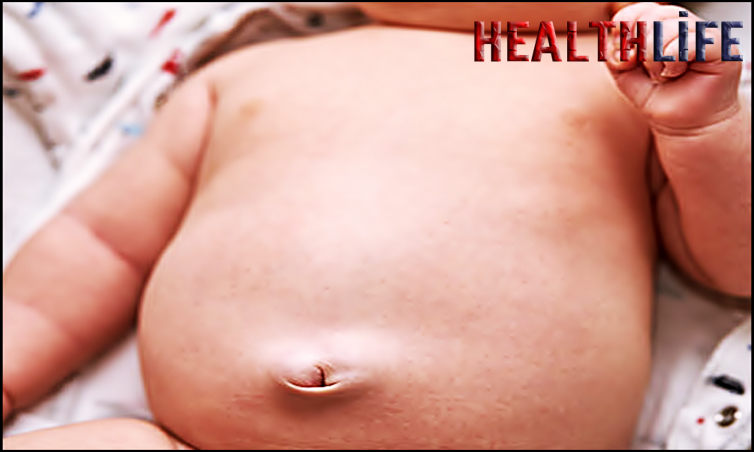
In most babies, umbilical hernia closes on its own around the age of 1 to 2. In some cases, the doctor can correct the hernia by pushing it into the abdomen. Only physicians can perform this application. It is definitely not recommended for a non-physician to try this. Treatment may be required in cases where the hernia does not close on its own or causes complications. Surgery is also recommended for the treatment of umbilical hernia in adults in order to prevent the development of complications such as the hernia growing and becoming painful. It does not require surgery until the age of 2. Defects of 2.5 cm and above are operated on between the ages of 2 and 7. All defects are operated on over the age of 7. It is definitely not appropriate to cover the umbilical hernia in babies with a pressure dressing. While it does not help premature closure, it may also cause harm.
How To Prevent Umbilical Hernia In Babies?
Umbilical hernia, seen in babies, develops due to abnormalities in the abdominal wall. There is no known way to prevent these hernias. Umbilical hernia, which is only seen in adults, occurs due to increased intra-abdominal pressure. Therefore, umbilical hernia in adults can be prevented to a certain extent.
Continuous cough increases intra-abdominal pressure. Situations such as smoking and occupational exposure to various chemicals damage the respiratory system. It can lead to lung diseases such as COPD, which are accompanied by persistent cough. Quitting smoking and taking the necessary precautions in the workplace reduces the risk of both lung diseases and umbilical hernia. Lifting heavy loads can also cause an umbilical hernia. In order to prevent the formation of an umbilical hernia or to prevent the progression of the disease in individuals with a hernia, it may be beneficial not to lift heavy loads. Since obesity can cause umbilical hernia, losing weight reduces the risk of hernia.
What Are The symptoms Of Umbilical Hernia In Babies, if you have questions about our article about what are the symptoms of umbilical hernia in babies, you can ask us in the comments section or on our social networks. What are the symptoms of umbilical hernia in babies? You can inform your friends about our article about what are the symptoms of umbilical hernia in babies by sharing our page with them so that they can also be informed.
For your questions and complaints, you can write to us in the comments section. We are trying to help you with all your problems.
Our other recommendation link that may attract your attention; What Causes Ear Bleeding?