What Are The Symptoms Of Guyons Canal Syndrome? What is Guyon’s Canal Syndrome?, Who is affected by Guyon’s canal syndrome? Some information about it.
What Are The Symptoms Of Guyons Canal Syndrome? What is Guyon’s Canal Syndrome?

The numbness, pain and loss of sensation felt in the little finger and ring finger are called Guyon canal syndrome. In the content of our article, you, our valued friends, can access and learn the answers to the questions Who is Guyon canal syndrome seen in? and What is Guyon canal syndrome? in detail. So What are the symptoms of Guyon canal syndrome?
In the advanced stages of Guyon canal syndrome, it causes muscle loss and loss of strength. This condition, which causes significant nerve damage, is treated with EMG and physical examination, depending on the stage of the disease. Physical therapy or surgical operation is applied during the treatment process. Guyon canal syndrome ends in the ring finger and little finger of the hand after the nerve passes through the tunnel. Although Guyon canal syndrome can develop as a result of old fractures around the wrist, masses occupying space in the tunnel, and connective tissue diseases such as rheumatoid arthritis, no specific cause can be determined in the vast majority of patients. It is frequently seen in people who make excessive movements with the wrist, especially in cyclists. Guyon canal syndrome is most commonly seen in men between the ages of 30 and 60. This condition is also common in women. You can continue reading our article to find out more about the symptoms of Guyon canal syndrome.
Who Has Guyon’s Canal Syndrome?
Guyon’s Canal Syndrome Symptoms
The most common symptoms of Guyon’s canal syndrome are pain, numbness and loss of sensation in the area of the little finger and half of the ring finger, which corresponds to the spread of the ulnar nerve in the hand. The ulnar nerve transmits motor signals from the brain to a large part of the muscles that move the hand. For this reason, in later stages, there are also losses in motor skills in the hand. The hand muscles weaken and the hand becomes clumsy. Patients state that they drop objects from their hands without realizing it. In advanced stages, there is also a significant weakening in the muscle between the thumb and index finger in the hand.
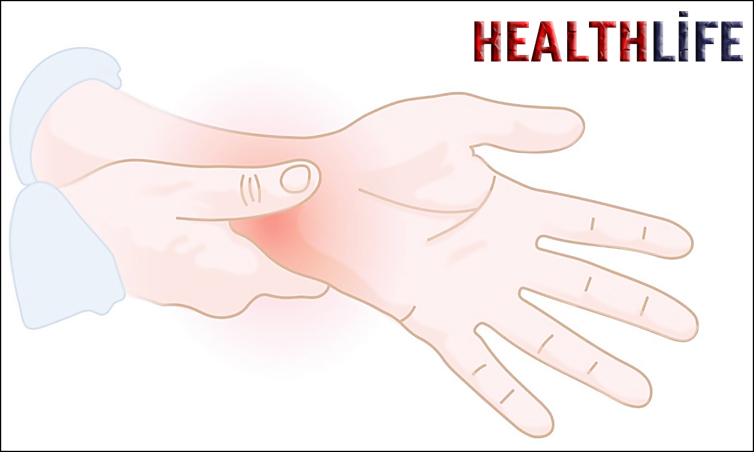
The diagnosis of this disorder is made as a result of the patient’s history and physical examination. The Tinel test is important in diagnosis. In the possible compression area of the nerve in the wrist, the nerve is tapped with a finger. The patient’s perception of a tingling sensation or electric shock sensation spreading to the area where the nerve provides sensation means that the test is positive. There are some examination methods that confirm the clinical diagnosis or help in differential diagnosis. The standard examination method for Guyon’s canal syndrome is electrodiagnostic examinations, which consist of nerve conduction studies and needle electromyography. With these examinations, the electrical conduction power of the nerves is measured, thus determining whether there is compression in the nerve and, if so, at what level. It is important to determine the level of compression of the nerve. Because the ulnar nerve is mostly compressed in the elbow region and the treatment of such compressions is different. If a mass that may cause compression in the tunnel is suspected, the MRI method can be used.
Is There a Treatment for Guyon’s Canal Syndrome?
Guyon’s canal syndrome is treated by surgically loosening the ulnar nerve in the wrist and freeing the tissues that cause compression. The surgery is performed with an approximately 2 to 3 cm incision on the inside of the wrist and is performed with regional or general anesthesia. Immediately after the surgery, all symptoms in all patients disappear and patients feel significantly relieved. The patient’s age, the duration of the disease history and the severity of the symptoms before the surgery are also very important factors affecting the outcome. As the patient ages, especially after the age of 65, the improvement in symptoms and hand functions may decrease.
Since nerve cell death can occur due to compression in the advanced stages of the disease, surgery should be performed without delay after the diagnosis of Guyon canal syndrome. However, even in patients over the age of 70, a significant improvement is seen in clinical symptoms and almost all patients are satisfied with the results. Therefore, regardless of age and disease stage, surgical treatment should not be avoided in patients with Guyon canal syndrome.
What are the Symptoms of Guyon Canal Syndrome, ulnar nerve entrapment neuropathy occurs when the ulnar nerve in the arm is compressed. Therefore, the nerve cannot function normally. After the elbow, the nerve passes under the muscles in the arm and reaches the palm and the little finger. While the nerve enters the hand, it travels in a different channel called the Guyon canal. Therefore, early diagnosis of Guyon canal syndrome is very important. If you have questions about our article on what are the symptoms of Guyon canal syndrome, you can ask us in the comments section or on our social networks. You can share our page with your friends so that they can be informed about the symptoms of Guyon’s canal syndrome. You can also inform your friends about our article on the symptoms of Guyon’s canal syndrome.
For your questions and complaints, you can write to us in the comments section. We are trying to help you with all your problems.
Our other recommendation link that may attract your attention; What Are The Symptoms Of Soap Allergy?