How To Treat Joint Bleeding? What are the Causes of Joint Bleeding? We have compiled some information you need to know about the treatment of joint bleeding in our article.
How To Treat Joint Bleeding? What are the Causes of Joint Bleeding?
Bleeding within the joint is seen as a typical symptom of hemophilia. Sick people who do not receive preventive treatment have an average of 1 to 4 joint bleeding per month and eventually develop joint disability. In the content of our article, you can access and learn detailed answers to the questions “joint bleeding treatment” and “what are the causes of joint bleeding?” for you, our dear friends. So How to stop joint bleeding?
In joint bleeding, bleeding occurs most frequently in large, frequently used, weight-bearing joints such as the ankle, elbow, knee, hip and shoulder. However, it is also found in other joints of the body. When there is bleeding, the first symptom that cannot be well described, such as tingling and numbness in the joint, is felt. Then pain and swelling begin. The patient does not want to move the joint, keeps it in a slightly bent, pain-free resting position, and feels warm on the joint when touched. As bleeding continues and the amount of blood in the joint increases, the pain becomes more severe. Strong painkillers are given to relieve the patient’s pain. Young children cannot describe the pain or hide it for fear of needles. The child’s unwillingness to walk, sudden inexplicable restlessness, or limping indicate bleeding. If ultrasonography is performed immediately when bleeding is suspected, blood within the joint can be detected quickly, easily and accurately.
Although no factor is given immediately when bleeding occurs, after a while, as the amount of blood increases in the joint, the pressure stops the bleeding and the blood is cleaned by the cells lining the joint. However, recurrent bleeding damages the sensitive protective layer lining the inside of the joint and initiates inflammation. This condition is called synovitis. As joint bleeding continues, synovitis becomes more severe. Swelling and loss of movement occur in the joint, and synovitis is generally ignored because there is no or mild pain. Synovitis increases bleeding, and bleeding worsens synovitis. The vicious circle that occurs in this way first melts the cartilage of the joint and then the bone tissue. In this case, the slippery structure that allows the joint to move disappears. Movements are severely restricted and the joint freezes and cannot move. When haemophilitis arthropathy develops, the muscles that move the joint become lazy and gradually weaken because they do not work well. When the muscles that protect weight-bearing movable joints, especially the knee and ankle, lose their strength, bleeding increases. Having strong muscles is one of the most important factors that protect the joint.
How To Treat Joint Bleeding?
Causes Of Joint Bleeding
Joint bleeding should be treated without delay as soon as it is noticed. The dose is calculated as 20 to 25 units/kg body weight in hemophilia-A and 30 to 40 units/kg body weight in hemophilia-B. While the treatment is being applied, the joint is rested at the same time. It is lifted above heart level, a pillow is placed under it and it is placed in a position that will not cause pain. An ice bag wrapped in a towel or a cold bag kept in the freezer, or if not, a bag of peas or corn in the freezer, is placed on the joint to be wrapped, and a cold compress is applied for 10 or 15 minutes. These 10 to 15-minute cold compress applications are repeated every 2 hours for 6 to 12 hours.
Cold application reduces every pain. It both helps stop bleeding and relieves swelling. To prevent bleeding in the joint from recurring, you can use an elastic bandage or a knee brace, etc. A splint should be placed to prevent movement of the bleeding joint, and the patient should not move the joint or put weight on it for approximately 24 to 48 hours until the pain subsides and the tension in the muscles around the joint disappears. However, it is not necessary not to stand up or walk at all. It is possible to walk with crutches without putting any weight on it. An arm sling should be used in case of shoulder joint bleeding. If the joint is extremely painful and tense and there is no response to the first treatment, the treatment dose should be doubled without delay and the blood in the joint should be drained by an experienced orthopedist under sterile conditions in the operating room.
Treatment should continue until the pain and swelling in the joint subside. Using the joint before the bleeding is fully healed delays healing. It causes synovitis and permanent damage. Lying down for a long time, immobility, and the use of bandages, splints, and plasters also cause the muscles to become lazy, shrink, the joints become loose, and bleeding occurs frequently.
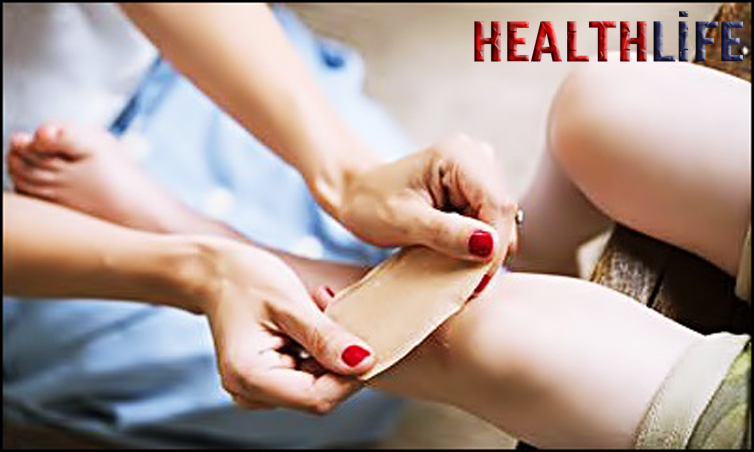
For this reason, active exercises should be started as soon as the pain and swelling disappear after bleeding. Reactive synovitis persists for 2 to 3 weeks after severe joint bleeding. During this period, putting weight on the joint causes bleeding to recur. For this reason, non-weight-bearing exercises should be done and full activity should be gradually started. During the recovery process after bleeding, help should be sought from a physiotherapist who has experience in the treatment of hemophilia.
What Are Joint Bleeding?
– Intramuscular bleeding,
– Bleeding after incisions,
– Cerebral hemorrhage,
– Nose bleeding,
– Bleeding in the mouth,
– Stomach, intestinal bleeding,
– Kidney bleeding,
– Easy bruising of the skin.
Joint bleeding is a rare disease in which blood does not clot as it should due to a deficiency of clotting factors. Clotting in the blood occurs due to the deficiency of proteins. Joint bleeding manifests itself clinically with swelling, pain and limitation of movement. When bleeding occurs in the joint, it is usually noticed by patients in advance. When the joint space fills with blood, temperature increase, swelling and sensitivity occur.
How To Treat Joint Bleeding, if you have questions about our article on how to cure joint bleeding, you can ask us in the comments section or on our social networks. You can inform your friends about our article on how to cure joint bleeding by sharing our page with them so that they can also be informed.
For your questions and complaints, you can write to us in the comments section. We are trying to help you with all your problems.
Our other recommendation link that may attract your attention; What Are The Symptoms Of Hematemesis?