What Are The Causes Of Epilepsy In Children? Epilepsy Treatment in Children, We have compiled some information you need to know about the symptoms of epilepsy in children.
What Are The Causes Of Epilepsy In Children? Epilepsy Treatment in Children
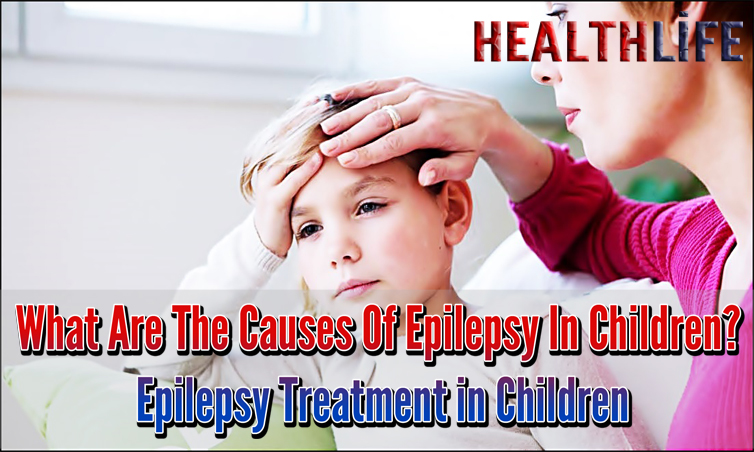
Epilepsy is a type of disease that occurs involuntarily, and sometimes causes changes or loss of consciousness, and is a periodic disease in which seizures are repeated. In the content of our article, you, our valued friends, can find detailed answers to questions such as How is epilepsy treated in children? and What are the symptoms of epilepsy in children? So What are the causes of epilepsy in children?
In epilepsy, abnormally short and sudden excessive bio-electrical discharges occur in the entire brain or in a group of brain cells in a certain area. This causes involuntary changes in the individual’s consciousness and movements. In epilepsy, brain cells normally continue their functions such as thinking and managing the body with bio-electrical activities. The requests and commands that occur as a result of these activities are transmitted along nerve extensions called axons, which extend from brain cells to other nerve cells and organs such as muscles. In epilepsy, contractile seizures are always noticed. In non-convulsive seizures, silent seizures may sometimes not be noticed during sleep until they become apparent. Very rarely, seizures can be detected only with EEG. In such cases, decreased daytime activity, deterioration in sleep quality, poor academic performance, and age-inappropriate changes in temperament are considered clues to suspect the disease. You can reach more detailed information about the causes of epilepsy in children by continuing our article.
How is Epilepsy Treated in Children?
Epilepsy Symptoms in Children
Today, no cause can be found in 50% to 60% of all epilepsy cases. This type of epilepsy usually begins before the age of 15. In the rest, the causes can be listed as congenital causes, congenital metabolic diseases, events affecting the child’s brain development during pregnancy, brain deprivation of oxygen during birth, injuries and intracranial hemorrhage, and meningitis, head trauma, accidents, brain tumors and long-lasting febrile seizures after birth.
Situations That Trigger Epilepsy in Children
– Excessive fatigue,
– Insomnia,
– Some medications,
– Some foods and drinks,
– Staying in the sun too long,
– Head trauma,
– Flashing lights,
– Television, computers and mobile devices,
– Stress,
– Infections,
– Skipping epilepsy medications.
In such cases where epileptic seizures recur, the prescribed treatment period is also extended. For this reason, it is very important to take epilepsy medications on time and in the specified amount. Not every individual with high fever develops epilepsy unless there is an underlying condition. High fever caused by infections causes seizures to occur in individuals receiving epilepsy treatment and decreases the effectiveness of the medication. Statistically, epilepsy, which occurs with recurrent seizures without fever, can occur in a very small portion of febrile seizures.
Certain symptoms are examined to diagnose epilepsy in children. When certain symptoms are observed, suspicion is raised and a doctor is consulted. Not every seizure encountered immediately leads to the diagnosis of epilepsy. Crying breath-holding seizures, childhood tics, fainting, childhood masturbation, jumping and shaking during sleep, shivering, neck movements, recurrent dizziness, night terrors, migraine, heart rhythm disorders and head movements due to gastroesophageal reflux are not epileptic seizures. However, since it can be confused with epileptic seizures and the treatments are different, it should be diagnosed and differentiated by a pediatric neurologist.
In the diagnosis of epilepsy, observation of the seizure and providing detailed information, and if possible, a video recording of the seizure taken by the camera in suspicious cases is very important for the doctor’s diagnosis. Apart from general blood analysis, EEG, which detects the electrical discharges of the brain with electrodes attached to the scalp and reflects them on paper or a computer screen, has no effect or harm. It is usually taken while the child is asleep and awake, considering the child’s age and seizure history. Sometimes MRI is required to visualize and investigate the brain structure in terms of epilepsy and seizure causes. Computerized tomography is generally not preferred in the diagnosis of epilepsy in children except for head trauma, intracranial hemorrhage and some rare cases.
Can Epilepsy Be Cured in Children?
Although there are different causes and types of seizures, the vast majority of pediatric patients respond well to medications. Seizures are easily controlled. Children who respond well to treatment, have no other neurological problems, and have been seizure-free for at least 2 years are considered to have recovered and the medications can be tapered off. It should also be remembered that uncontrolled and sudden discontinuation of epilepsy medications will cause seizures to recur. In pediatric patients with a good course, it is possible to completely recover from epilepsy at a rate of 70% to 80%. Epileptic seizures in children are primarily treated with medications called anti-epileptics. Medications suppress seizures and treat them.
Depending on the patient’s condition and the course of the disease, the treatment period lasts between 2 and 4 years. There are also some types of epilepsy that require lifelong medication. The medications that are started may have side effects such as mild nausea, dizziness, mild drowsiness, tremors in the hands, and mild imbalance. These symptoms are usually temporary. In resistant patients who do not respond to epilepsy medications, other treatment methods such as ketogenic diet, vagal neural stimulation, and epilepsy surgery are also preferred.
Although epileptic seizures may seem life-threatening, they usually do not have a life-threatening outcome from a medical perspective. Most seizures end spontaneously after a few minutes without causing any bad results. They do not require urgent medical intervention. Afterwards, the child falls asleep tired and rests. This period may vary depending on the severity and duration of the seizure. After waking up, the child returns to his/her normal life. If he/she does not have a permanent disease that primarily affects the brain during the period when he/she does not have a seizure, the child continues his/her normal life.
What are the Causes of Epilepsy in Children, seizures can gradually increase in individuals who are not controlled and treated. It can negatively affect brain functions in terms of deterioration. If you have questions about our article on what are the causes of epilepsy in children, you can ask us in the comments section or on our social networks. You can share our page on what are the causes of epilepsy in children with your friends so that they can also be informed, and you can inform your friends about our article on what are the causes of epilepsy in children.
For your questions and complaints, you can write to us in the comments section. We are trying to help you with all your problems.
Our other recommendation link that may attract your attention; What Are The Symptoms Of Pelvic Fracture?